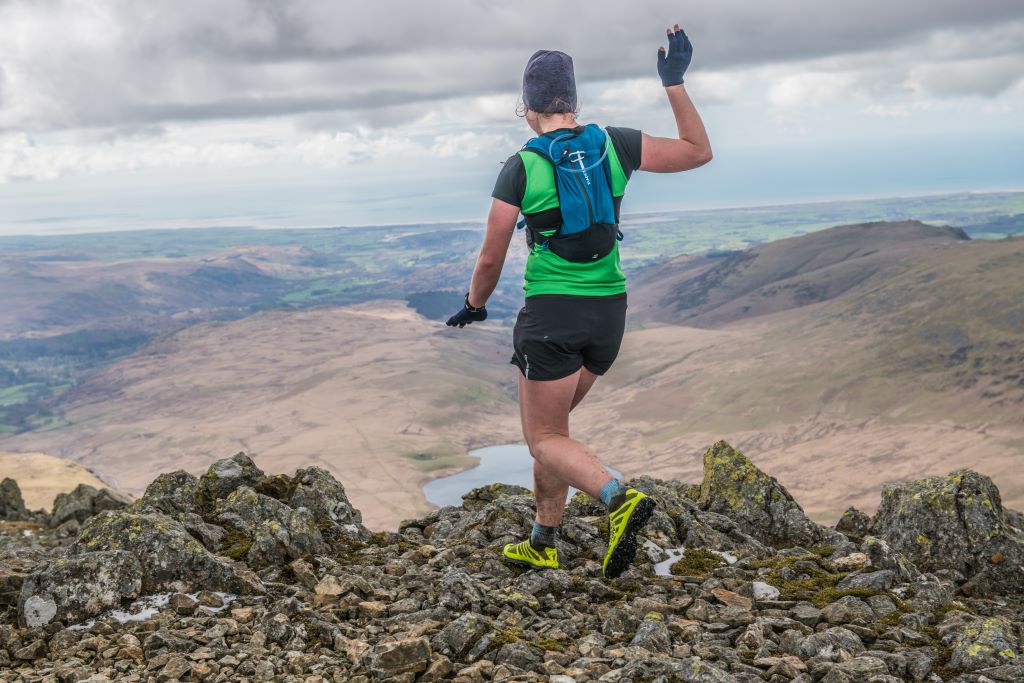
Fell running is an exciting and exhilarating sport that takes you to some wild and wonderful places, and Black Combe Runners are a friendly bunch who are more than happy to help you find your way around the sport.
There are a few things we’d ask you to read before coming along on one of our runs – this helps keep both you and us safe.
If you aren’t sure about something below, or would like advice on either running or an item of equipment, please ask.
The ethos of fell running is based on people being able to look after themselves safely in the mountains. Self sufficiency and self-navigation are central to this ethos, as is the willingness to assist anyone else in need in the mountains.
As a club, Black Combe Runners (BCR) are affiliated to England Athletics. The Fell Runners Association (FRA), who oversee the sport provide membership to individual athletes and most BCR members are also FRA members, benefits of this are shown here. It’s also a good idea checkout the FRA Principles of Fellrunning page.
It is always important to take the right equipment into the mountains in order to remain safe. Probably the most important is a set of fell/trail shoes with a good grip. Good examples of these can be found at https://www.peteblandsports.co.uk
Some of the equipment you should carry is for when you can’t run rather than when you can, hypothermia can set in fast on even reasonable days if you are immobile. The minimum kit to carry for FRA licenced races, and a good starting point for any trip into the hills, is:
- Waterproof whole body cover (with taped seams and integrated hood)
- Hat and gloves
- Map of the route, compass and whistle
- Emergency food
Navigation in the mountains is a difficult skill to learn but may save your life. The use of GPS devices in FRA races has been banned so the ability to use a map and compass efficiently is important. An excellent introduction to mountain navigation is here.
Other bits of kit are useful to carry during cold winter months (or even cold spring and autumn months):
- A phone, especially if you are on your own
- A headtorch
- An extra thermal base layer, or “down” jumper
- An emergency bivvy bag
- For icy conditions, microspikes that slip over your shoes
Don’t be put off by all this, you’ll soon get a better feel for what you should be doing or what you should carry on any given day, depending on what you plan and what the weather is. Any experienced runner in the club will be happy to give advice, just be sure that if you ask about shoes you have a spare hour or so.